
How to pass The DMV Test
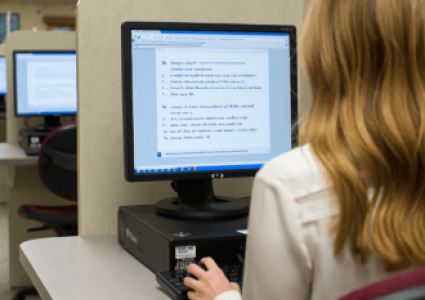
The exam at the Department of Motor Vehicles (DMV) in the USA is a mandatory procedure for obtaining a driver's license, which includes both theoretical and practical parts. The theoretical exam, often referred to as the written or traffic rules test, assesses the candidate's knowledge of traffic rules, signs, safe driving methods, and state legislation. The practical exam, or driving test, evaluates the candidate's ability to operate a vehicle in real conditions, including performing various maneuvers, adhering to traffic rules, and safely interacting with other road users.
To successfully pass the exam, it is important to thoroughly prepare using official guides and study materials, such as the state driver's manual and practice tests, which help identify weaknesses and increase confidence. Additionally, it is recommended to take preparation courses and gain sufficient driving practice under the supervision of an experienced driver. An important aspect is also knowing the requirements for the vehicle on which the practical exam will be taken, including the proper functioning of the main systems and the presence of insurance.
Understanding the DMV Exam: Types and Requirements
In this section, we will examine in detail the various types of DMV exams, as well as the general and specific requirements that must be met to successfully obtain a driver's license in the USA. Here you will not find repetitions of facts you already know about road tests and documents, but you will learn new nuances that will help you navigate the process and avoid unexpected surprises.
Types of DMV Exams: Not Just Road and Theory
Most people think that the DMV exam is just a written test and driving. But in reality, the DMV offers several types of exams, each of which tests different skills and knowledge.
| Exam Type | Description | Who Needs It |
| Written (Theoretical) Test | Checking knowledge of traffic rules, signs, and safety basics. | All beginners before obtaining a driving permit. |
| Practical (Road) Test | Assessing the ability to operate a vehicle in real road conditions. | For obtaining a full driver's license. |
| Special Rules Knowledge Test | For example, for commercial drivers (CDL) or motorcyclists. | Drivers applying for special license categories. |
| Vision Test | Checking visual acuity and the ability to see road signs and obstacles. | All candidates before issuing a license. |
| Additional Checks | Sometimes include demonstrating the operation of vehicle controls (signals, wipers, etc.). | In some states before the practical exam. |
This list expands the understanding of DMV exams, going beyond the usual perception that the exam is only about driving and theory.
Vehicle Requirements: Not Just "It Should Start"
Many believe that having a car that simply drives is enough to pass the road test. Wrong! The DMV examiner will carefully check the technical condition of the vehicle before the test begins. If the car does not meet the standards, the exam will be postponed, and you risk wasting your time.
Key vehicle requirements include:
- Adequate tire condition (tread depth of at least 2/32 inch).
- Working brakes, including emergency and parking brakes.
- Presence and validity of front and rear license plates.
- Valid insurance.
- Working seat belts.
- Working horn.
- Working turn signals and brake lights.
- Adjustable rearview and side mirrors.
- Ability to lower side windows.
- Doors that open from the inside and outside.
If any of these points are not met, the examiner has the full right to cancel the test until the faults are rectified. So do not rely on luck—it is better to check the car in advance and bring it into proper condition.
Document Requirements: Prepare to Avoid Embarrassment
Documents are a part of the preparation that many underestimate, but it is because of them that exam applications are most often rejected. It is important to know that the list of required documents may vary depending on the state, age, and type of license, but there are basic mandatory items:
| Document | Description | Notes |
| Identification | Passport, birth certificate, or other document. | Must be officially recognized. |
| License Application | Completed form, sometimes with parents' signatures (for minors). | In some states, personal completion is required. |
| Proof of Residence | Two documents confirming the address in the state (bills, lease agreement, etc.). | It is important that the documents are current. |
| Insurance | Policy confirming financial responsibility. | Mandatory for using your own car. |
| Certificate of Completion of Training | For minors—confirmation of completion of driving courses. | Required in a number of states. |
| Social Security Number (SSN) | Card or official document with the Social Security number. | Mandatory for all, except for certain categories of foreign citizens. |
Failure to meet any of these requirements threatens refusal to take the DMV exam, even if you are ready to show perfect driving.
Features of the Exam for Different Age Groups and Statuses
DMV exams are not the same for everyone. Depending on age and status (e.g., beginner, adult, foreign citizen), the requirements and procedures may differ significantly.
| Candidate Category | Features of the Exam and Requirements |
| Minors (<17 years old) | Mandatory completion of driving courses, a minimum of 60 hours of practice, including night driving, parental consent. |
| Adults (18+) | Passing written and practical tests, providing two proofs of residence, no mandatory driving course. |
| Foreign Citizens | Possibility to waive some tests if you have a valid license from certain countries, temporary licenses, additional documents. |
| Drivers with Restricted Rights | Special conditions, for example, limited driving time, accompaniment by an experienced driver. |
These features affect not only the preparation for the DMV but also the exam process itself, including the need to sign up for the test in advance and bring additional documents.
Preparation for the Exam: What DMV Expects from You in 2025
In 2025, the DMV is increasingly focused on a comprehensive check of knowledge and skills, including not only the ability to drive but also knowledge of the vehicle's structure and the ability to use its controls.
Before the start of the road test, the examiner may ask you to demonstrate the operation of the controls:
- Turning on the wipers and emergency signal.
- Using turn signals.
- Checking rearview and side mirrors.
- Setting the parking brake.
This is done to ensure that you not only know how to drive but also know your car inside out. Don't worry, you don't need to be the owner of the car, but knowing its features will significantly increase your chances of success.
Thus, understanding all types of DMV exams and their requirements is the first step to successfully obtaining a driver's license in the USA. Remember that preparation is not only about driving practice but also about carefully following technical and documentary requirements, as well as knowing the features of your state and license category. Good luck on the roads and at the DMV!
Preparing for the DMV: How Not to Go Crazy and Pass on the First Try
Preparing for DMV exams is like preparing for a date with destiny: a little exciting, lots of rules, and you want to make a good impression at first sight. But don't worry, here you will find fresh, useful, and unique tips that will help you pass both the written and practical exams without unnecessary nerves and mistakes. And yes, we will do without boring repetitions from the sections you already know.
How to Learn Traffic Rules and Road Signs
The DMV written exam is a test of your knowledge of traffic rules, signs, and safe behavior on the road. To avoid failing, you need not just to cram but to understand and remember the material.
| Preparation Method | Description and Benefits | Application Tips |
| Reading the Official Manual | The most reliable source of information is the official driver's manual of your state. | Read by chapters, take notes, highlight important points. |
| Online Practice | Free and paid online tests that simulate the real exam with questions from the DMV database. | Take tests regularly, analyze mistakes. |
| Visual Study of Signs | Learn signs in real conditions—during trips, walks, or watching videos. | Create flashcards with images and meanings of signs. |
| Group Lessons | Discussing rules with friends or in driving school helps to better absorb the material and relieve stress. | Exchange questions and explanations. |
| Mnemonic Techniques | Use funny associations and rhymes to remember complex rules and signs. | Come up with your own humorous phrases to make it easier to remember. |
Example: To remember that a red light means "stop" and a green light means "go," you can imagine that red is like red lipstick that says "stop, don't come closer!" and green is like a green traffic light that invites "go ahead, handsome!"
How Not to Fall Asleep Over a Book
Preparing for the DMV test is not only about what to study but also about how to study. Proper organization of the process will help avoid procrastination and increase efficiency.
- Allocate specific time for classes every day, for example, 30-45 minutes in the morning and evening.
- Create a comfortable place for studying: good lighting, a comfortable chair, minimal distractions.
- Use timers (for example, the Pomodoro method: 25 minutes of work, 5 minutes of rest).
- Change activities: reading, tests, watching educational videos, so as not to get bored.
- Record progress and note topics that require additional attention.
This way, you will not only prepare for the exam but also maintain vigor of mind and body, which is important for successful completion.
Practical Tips
The DMV practical exam is not only a test of your driving skills but also your ability to make quick decisions in real traffic situations. Here's how to prepare for this:
| Skill | Why It's Important | How to Train |
| Control | Ability to smoothly start, brake, and steer | Practice in empty parking lots and quiet streets |
| Parking | Important for the exam and everyday life | Practice parallel and perpendicular parking |
| Maneuvering | Turns, lane changes, U-turns | Learn to plan ahead and signal |
| Compliance with Rules | Stop lines, pedestrians, signs | Pay close attention to road signs and signals |
| Attention and Calmness | Emotional control and concentration | Meditation, breathing exercises before the exam |
Don't forget that the DMV examiner may ask you to demonstrate the operation of the vehicle's controls: turning on the wipers, turn signals, checking mirrors, etc. Knowing your car is a bonus that can increase your chances of success.
Common Mistakes and Tips for Successfully Passing the DMV Exam
The DMV exam is a serious test that checks your readiness for safe driving in real conditions. Many people fail not because of a lack of knowledge, but because of small but critical mistakes.
1. Technical Condition of the Vehicle — Your First Exam
Yes, the DMV exam starts even before you get behind the wheel! Bringing a faulty car is almost like coming to a date in a dirty T-shirt: immediately a minus in karma from the examiner. Often overlooked details such as:
- Functionality of all seat belts (yes, even for passengers).
- Cleanliness and absence of cracks on the windshield.
- Correct operation of all mirrors.
- Functionality of turn signals, brake lights, and headlights.
- Presence of two license plates and current registration.
If your car does not meet these requirements, the DMV exam will simply not allow you to take it. Check the car at least a few days before the exam to have time to fix the shortcomings and not get into an awkward situation.
| Check | Why It's Important | Checking Tips |
| Seat Belts | Mandatory safety requirement | Check all belts, including the rear ones |
| Windows and Mirrors | Provide visibility and safety | Clean and check for cracks |
| Lighting Devices | For visibility and signaling to others | Check all bulbs and replace burnt-out ones |
| License Plates and Registration | Legality of use | Ensure the documents are current |
2. Psychological Stability — Don't Let Nerves Get the Better of You
Nervousness is the main enemy of a driver's license candidate. Examiners are not looking for a reason to catch you out; they want to make sure you can stay calm in stressful situations. Here are a few life hacks:
- Before the test, take a few deep breaths in and out to reduce stress levels.
- Imagine that the exam is just another driving practice, not the final of the world championship.
- If you make a mistake, don't panic—it's better to focus on the next maneuver.
- Use positive affirmations like "I can handle it" or "I'm ready for this."
These techniques will help you stay focused and show the examiner that you are a driver who knows how to control your emotions.
3. Maneuvers and Vehicle Control — Smoothness and Confidence
Many people fail due to abrupt movements and improper vehicle control. Here's what to consider:
- Smooth steering. Sharp turns of the wheel look uncertain and can lead to loss of control.
- Correct hand position. Hold the wheel with both hands, preferably in the "9 and 3" or "10 and 2" positions. Driving with one hand is perceived as an inability to control the situation.
- Moderate acceleration and braking. Don't press the gas pedal to the floor and don't brake sharply—the examiner evaluates your ability to control the car smoothly.
- Smooth stops. A complete stop at the stop line is mandatory; "rolling" on the stop signal (rolling stop) is a common cause of failure.
If you demonstrate confident and smooth control, the DMV examiner will feel that you are ready for real driving.
4. Attention to Detail — Mirrors, Signals, and Visibility
Driving is not just about steering and pedals; it's also about constantly monitoring the environment. Examiners pay special attention to how you use mirrors and signals:
- Check mirrors every 5-10 seconds to stay aware of the situation behind and to the sides.
- Don't forget to look in the "blind spots" when changing lanes.
- Always turn on turn signals at least 5 seconds before a maneuver.
- Before pulling out from the curb or parking, always look over your shoulder.
Examiners like it when a candidate clearly demonstrates their actions—this way they see that you are not just doing everything automatically but are actually controlling the situation.
| Action | Recommendations | Why It's Important |
| Checking Mirrors | Every 5-10 seconds, including blind spots | Prevents accidents when changing lanes |
| Using Turn Signals | 5 seconds before a maneuver | Informs other road users |
| Checking Before Pulling Out | Turning your head over your shoulder | Ensures there are no obstacles |
5. Proper Reaction to Road Signs and Situations — Do Not Ignore the Rules
Violating traffic rules is not just a mistake; it is almost a guaranteed failure. Here's what to pay attention to:
- Complete stops at STOP signs—no "rolling" stops.
- Observing the speed limit—neither too fast nor too slow.
- Proper behavior at four-way stop intersections—clear understanding of the right of way.
- Respect for pedestrians—always yield the right of way if they are crossing the street.
DMV examiners are especially strict about these points, as they are directly related to road safety. Violating these rules can lead to an automatic failure of the exam.
| Rule | Common Mistakes | How to Avoid |
| Complete Stop at STOP | Rolling stop (incomplete stop) | Stop completely, count to 2 |
| Observing the Speed Limit | Speeding or driving too slowly | Pay attention to signs, use cruise control |
| Right of Way at Four-Way STOP | Delay or confusion | Remember the rule "first come, first served" |
| Yielding to Pedestrians | Ignoring or delaying | Always slow down and be prepared to stop |
Differences from Existing Content
- Unlike sections on preparation and exam requirements, here the focus is on practical mistakes and specific tips that will help avoid typical failures.
- Unlike psychological preparation, we provide specific techniques for managing stress and behavior during the exam.
- Unlike general preparation recommendations, here we consider in detail the technical aspects of the car and maneuvers that are often overlooked.
- Unlike existing lists of mistakes, we have structured the tips with tables and specific recommendations, making them easier to understand and remember.
Good luck on the DMV exam—may your car and your composure be at their best!